Start with the deposit
Hard-water residue can leave calcium, magnesium, silica, and other minerals after water evaporates. If the mark is primarily deposited material, appropriate chemistry may remove it without polishing.
Then reassess for etching
Minerals and heat can leave a chemical or physical imprint in the clear coat or glass. Once the deposit is gone, a remaining ring may be etching. More chemical remover will not restore material that has already been altered.
What has to be true before you escalate
Do not move to the next method because the previous one was inconvenient or slow. Escalate when the previous step has removed what it is capable of removing, the remaining mark has been identified, and the next method has a reasonable safety margin on that surface.
| Escalation | Evidence needed first | Stop or redirect if |
|---|---|---|
| Cleaner → mineral remover | The surface is clean and dry, but chalky or ring-shaped residue remains and the exposure history is consistent with hard water. | The mark is actually a scratch, chip, overspray, interior-glass contamination, or another defect that mineral chemistry will not address. |
| Mineral remover → mild paint polish | Mineral material has been removed, the remaining ring persists under dry inspection, and a small least-aggressive test spot improves the mark. | Paint history is unknown or suspect, the area is an edge/body line, thickness is unusually low where measured, or the defect is too deep to justify chasing. |
| Mineral remover → glass polish | The residue is gone, the remaining defect is on the exterior glass surface, and a small test area responds to glass-specific polishing. | The mark is on aftermarket film, inside the glass, near a chip/crack, or polishing creates excessive heat or distortion. |
| Mild correction → heavier correction | The mild test spot is safe and finishes cleanly but leaves a meaningful defect that can reasonably be improved with more cut. | The extra material removal would be greater than the visual benefit or the available surface margin is uncertain. |
Prevention is process control
Removing standing water, managing sprinkler exposure, keeping protection maintained, and addressing deposits early reduces the time minerals have to concentrate and react on the surface. No coating makes mineral-laden water harmless.
| Observation | Interpretation | Next step |
|---|---|---|
| Chalky/raised residue that changes with chemical treatment | Surface mineral deposit | Continue controlled chemical removal |
| Ring remains after mineral residue is gone | Likely etching or surface alteration | Test mild polish/correction if appropriate |
| Glass spot resists cleaner but responds to polish | Bonded/mineral contamination or etching | Use glass-specific correction method |
| Repeated spotting under sprinklers | Environmental source persists | Fix exposure pattern, not just the symptom |
Products that belong at this decision point
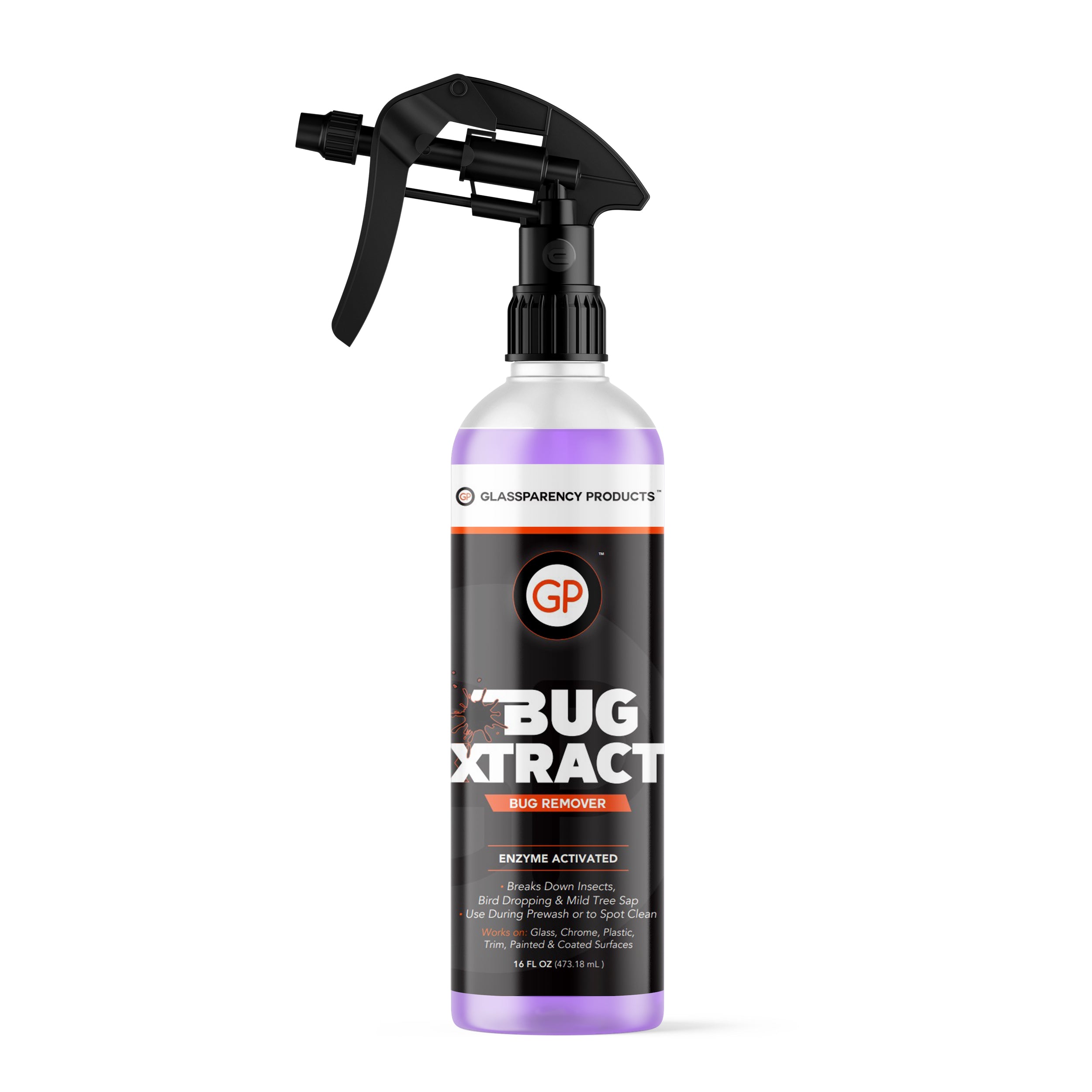
Bug Xtract Bug Remover
Targeted pre-treatment for organic road contamination before contact washing.
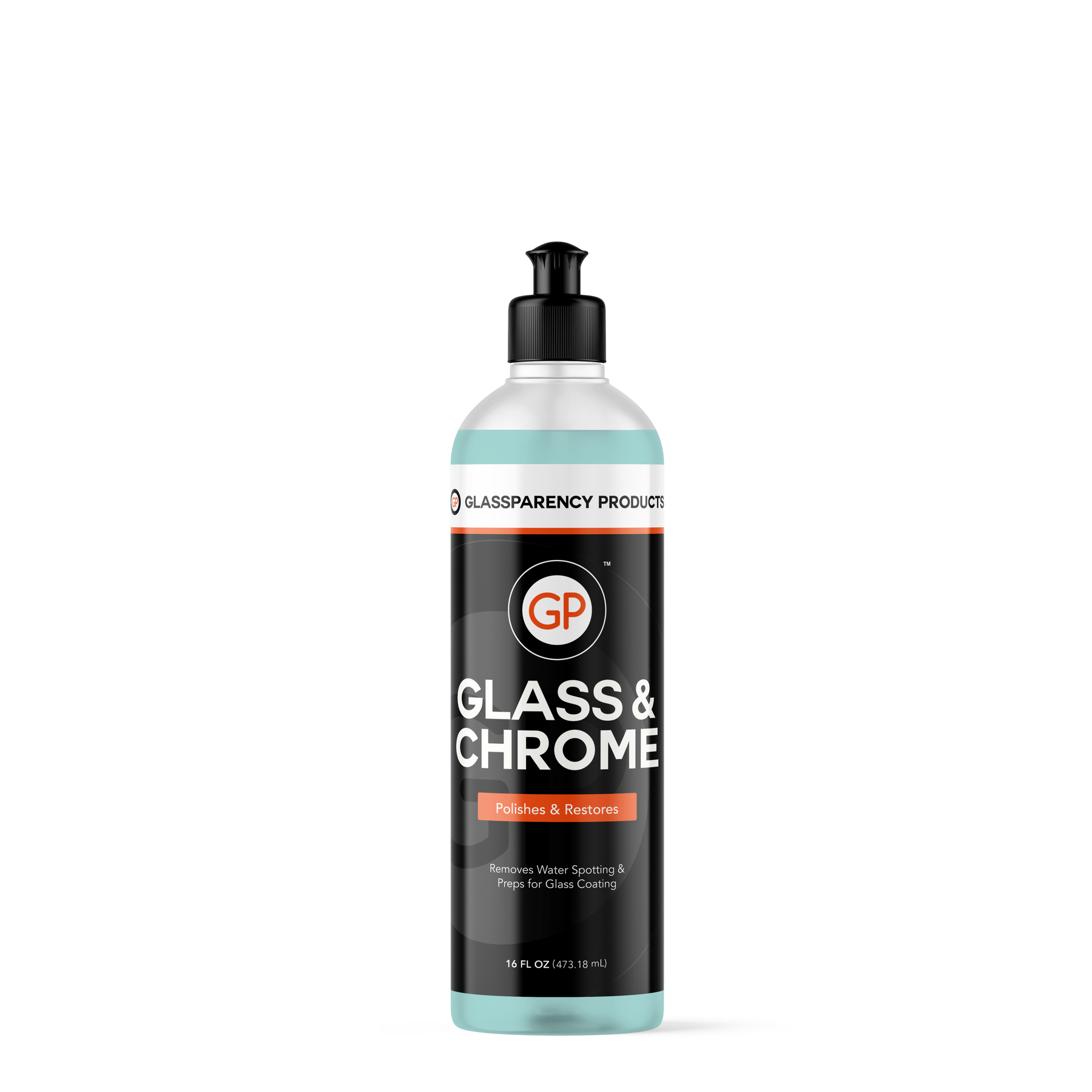
Glass & Chrome Polish
A polishing step for bonded contamination or mineral residue that routine glass cleaner cannot remove.
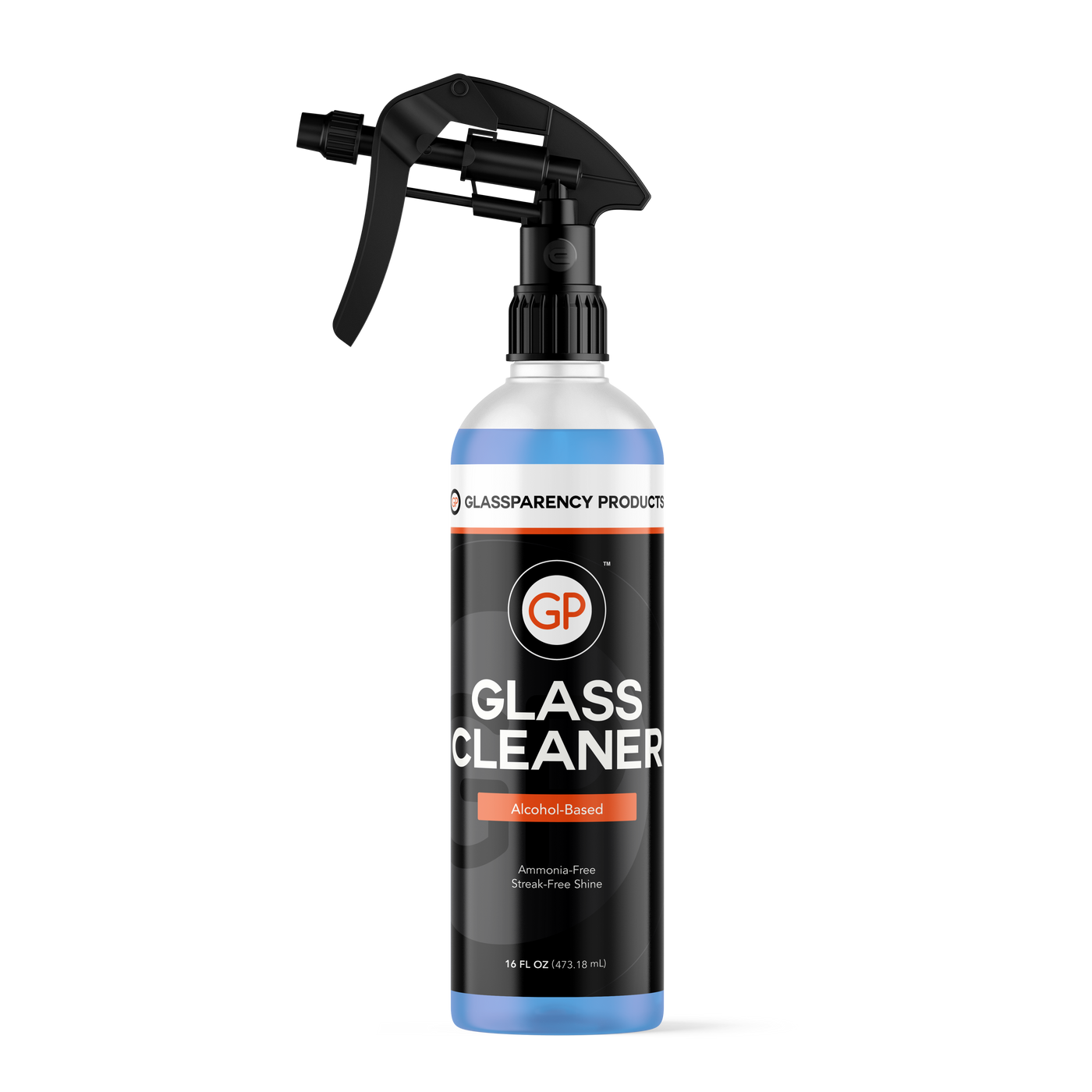
Glass Cleaner
Routine glass-cleaning chemistry for oils, fingerprints, haze, and maintenance residue without moving into abrasive correction.
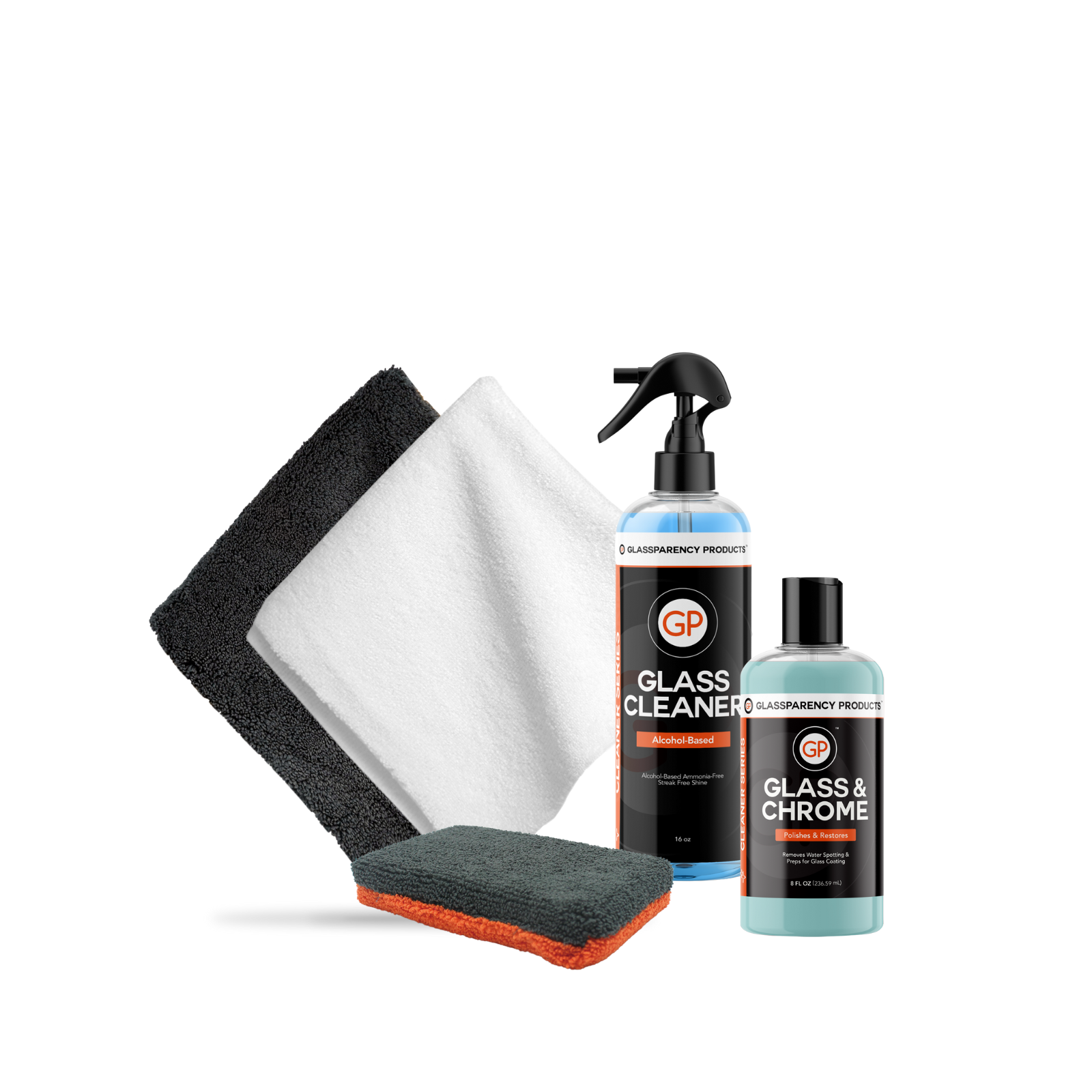
Glass Polish Kit
Glass-care chemistry for either routine residue removal, mineral removal, or mechanical polishing depending on the defect.