Wool and microfiber increase mechanical bite
Fiber-based pads expose more working edges to the surface and can remove defects faster. That efficiency can be valuable, but it increases the need for pad cleaning, temperature control, and finish refinement.
Foam changes cut through density and structure
Firm, open, or aggressive foam generally transmits more correction force than soft finishing foam. Softer foam can improve clarity and reduce haze but may require more cycles if the defect is too deep for the combination.
Pad saturation changes behavior
As a pad loads with spent abrasive, paint residue, oils, and clear-coat material, its cut and finish can shift. Cleaning or changing pads is part of controlling the process, not just housekeeping.
One-step correction is paint-dependent
A pad/liquid combination that cuts and finishes well on one paint system may haze another. The test spot determines whether a one-step system is actually one step on that vehicle.
| Pad class | Typical role | Primary risk |
|---|---|---|
| Wool / heavy fiber | Fast defect removal | Heat, haze, excessive material removal |
| Microfiber cut | Efficient correction with controlled fiber face | Loading and haze on soft paint |
| Medium foam | One-step or moderate correction | Can be too aggressive or too slow depending on paint |
| Finishing foam | Refinement and clarity | Insufficient cut can encourage excessive cycles |
Products that belong at this decision point
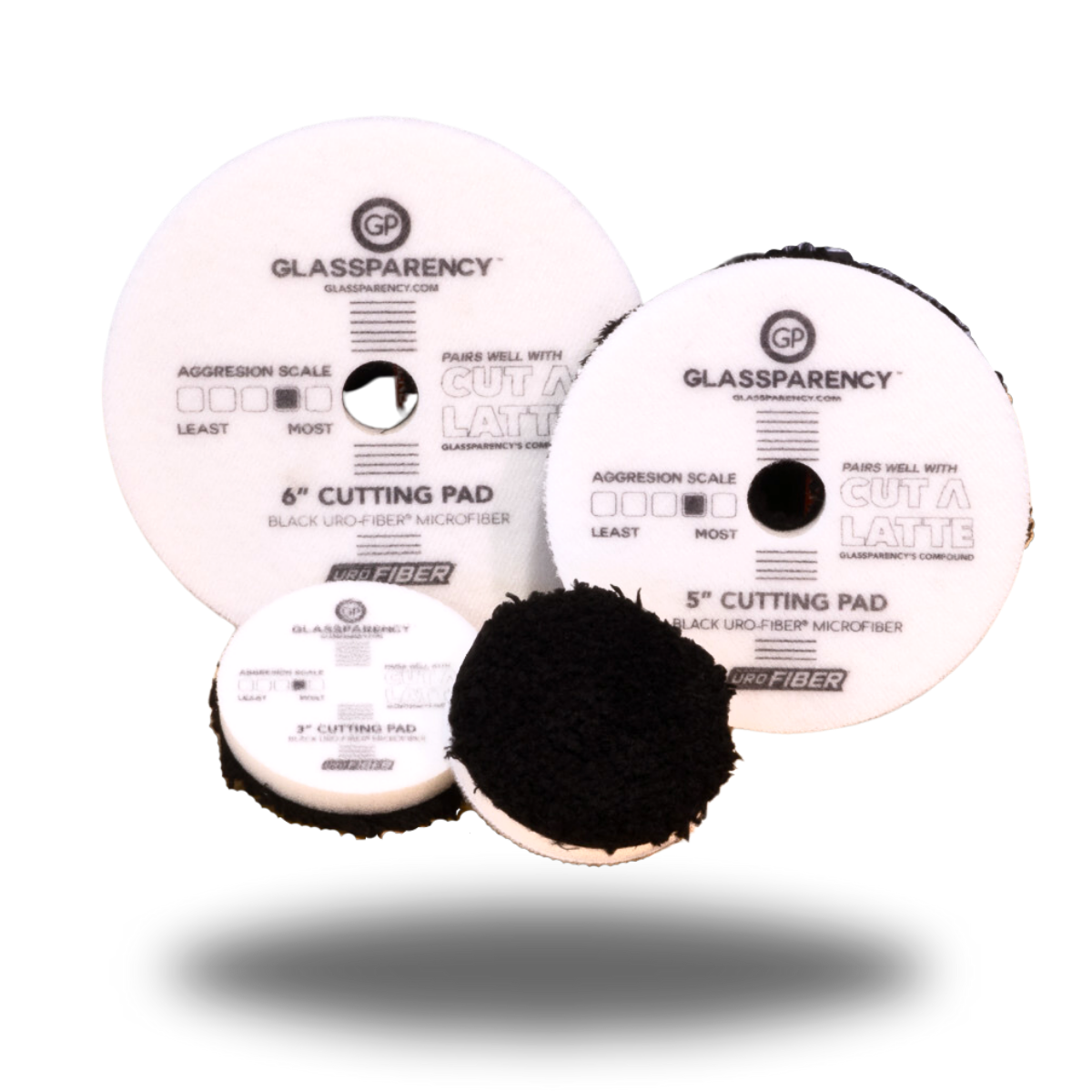
Black UroFiber Medium Cut Microfiber Pad
Microfiber correction pad for higher defect-removal demand than a finishing foam pad, while staying below the aggression of the heaviest cutting systems.
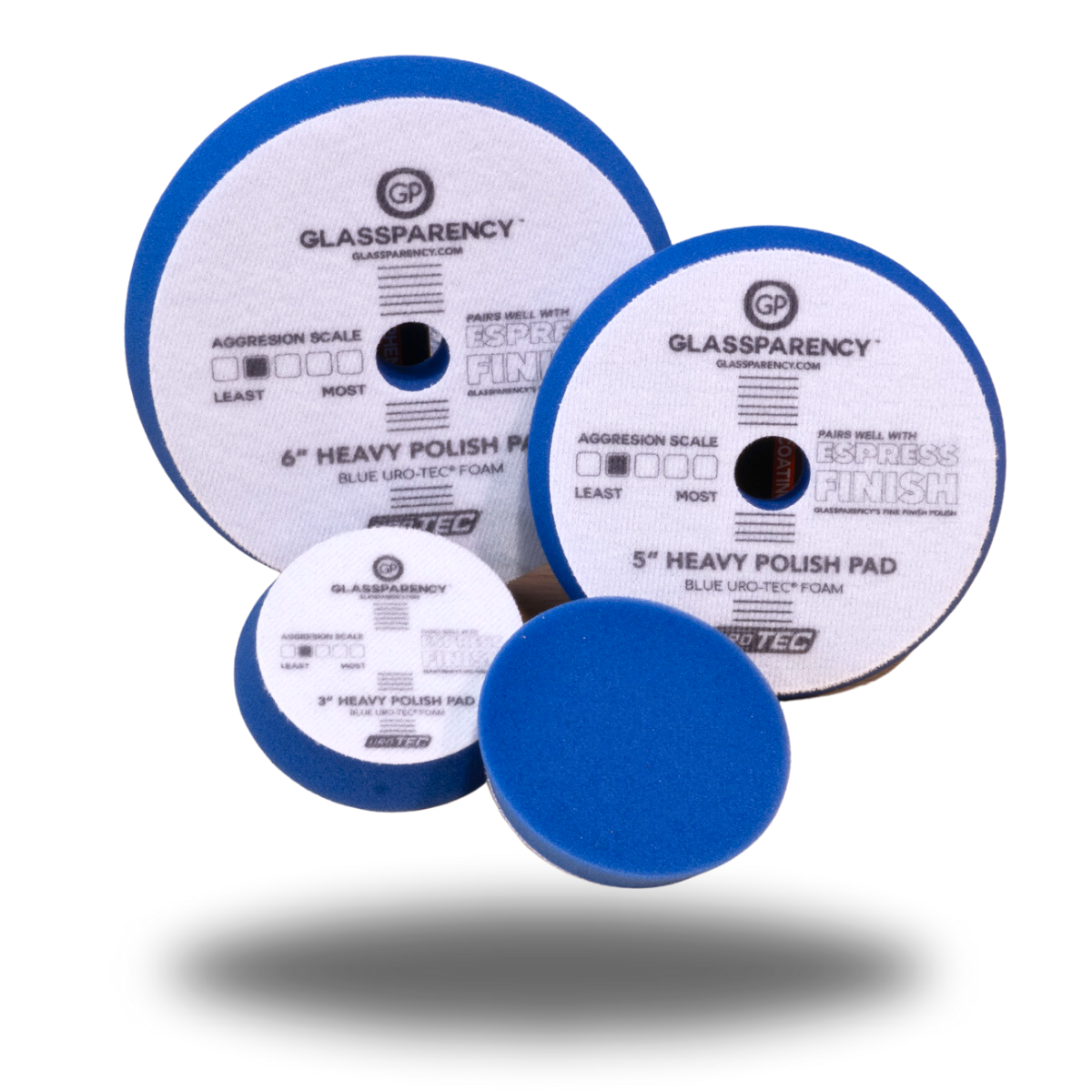
Blue UroTec Light Cut/Heavy Polish Foam Pad
Light-cut/heavy-polish foam pad for refinement, one-step correction, or softer paint where a medium-cut pad is too aggressive.
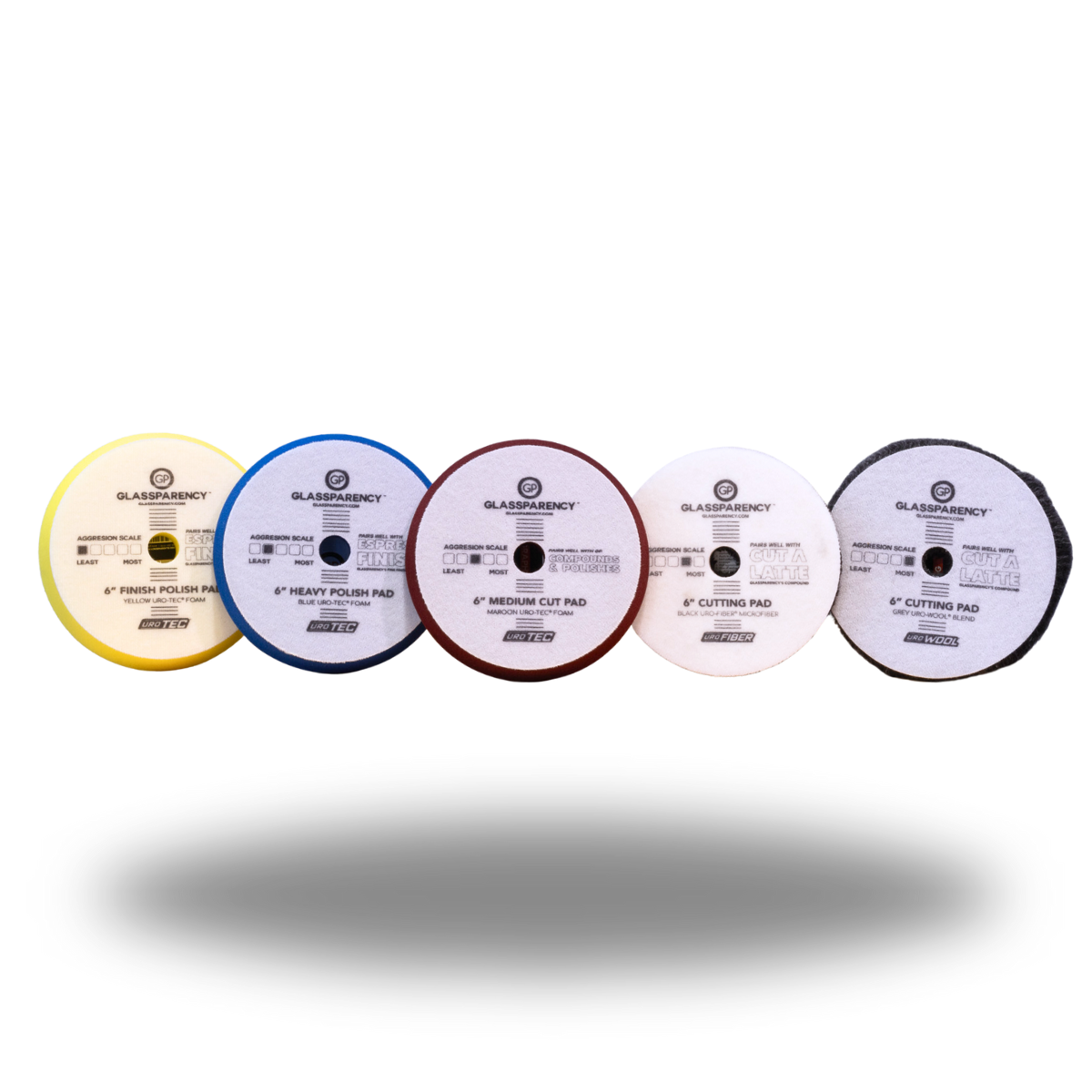
Cut, Polish, Finish All-in-One Pads Kit
Correction component whose result depends on pad material, liquid, machine throw, pressure, speed, paint hardness, and cycle time.
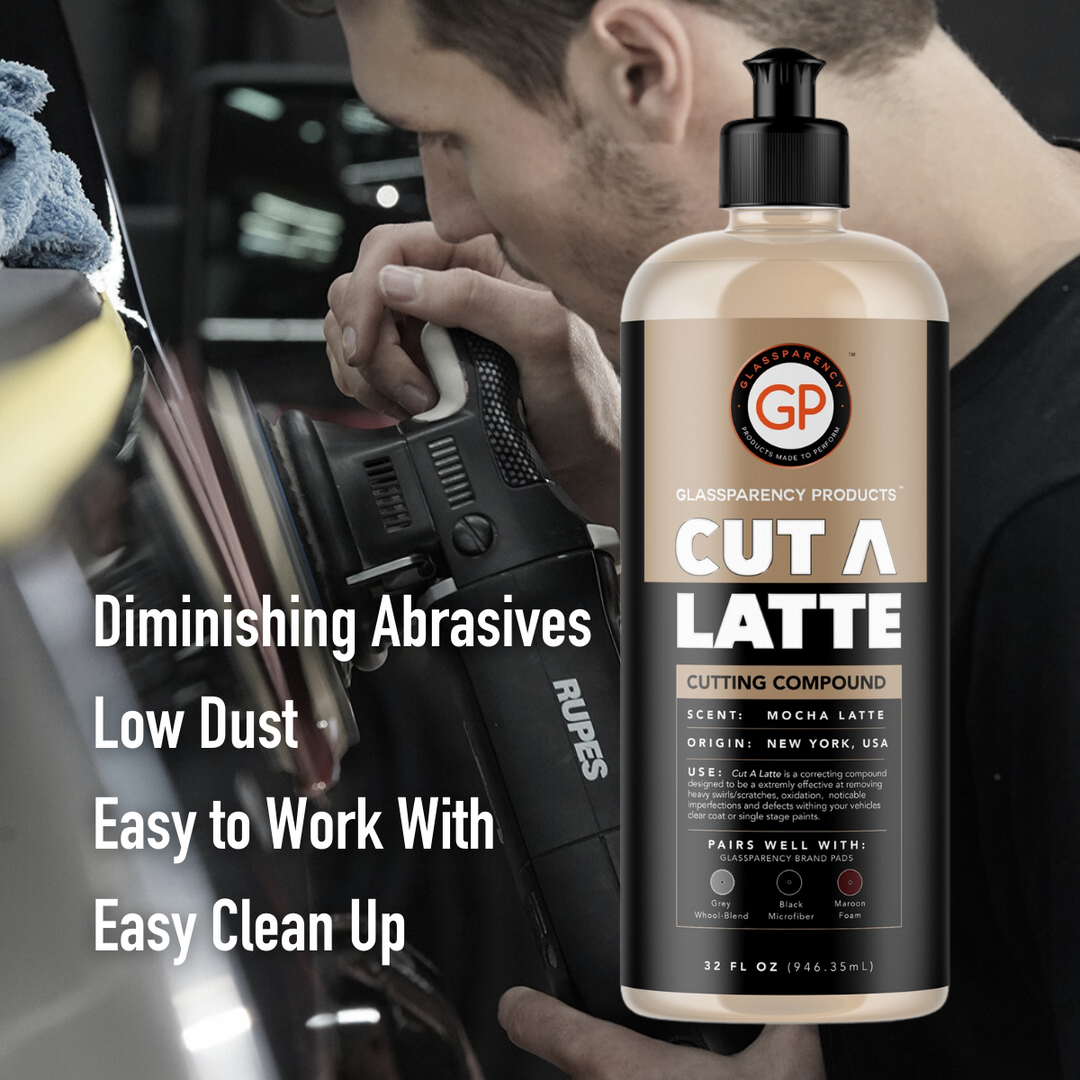
Cut-a-Latte Cutting Compound
Correction component whose result depends on pad material, liquid, machine throw, pressure, speed, paint hardness, and cycle time.