A scratch is geometry
A visible defect changes how light reflects from the clear coat. Correction reduces the height difference between the defect and surrounding surface. That means some amount of material is removed or reshaped. Deep defects may be safer to improve rather than eliminate completely.
The system creates the cut
Pad material, liquid abrasives, machine movement, pressure, speed, heat, paint hardness, pad cleanliness, and cycle time all contribute. A “medium” pad on soft paint can behave more aggressively than expected; a heavy system on hard paint may finish better than its label suggests.
Test spots are the decision engine
A test spot is not just a quick sample pass. It is the evidence used to decide whether more cut is justified. The panel should already be washed and decontaminated, the defect should be visible under useful lighting, trim and vulnerable edges should be accounted for, and any repaint or unusually thin area should change the plan before the machine touches it.
| Move | What must be established first | Reason to stop |
|---|---|---|
| Finishing polish → medium cut | The finishing test spot leaves a clearly defined defect, the finish remains stable, and the defect is shallow enough that additional cut has a realistic benefit. | The remaining defect is isolated and deep, the panel is thin/unknown, or the extra cut would be mostly cosmetic chasing. |
| Medium cut → heavy cut | The medium system is making safe but insufficient progress, pad/liquid are not simply loaded or spent, temperature is controlled, and paint history/thickness margin supports more removal. | Edges/body lines are involved, heat is building, haze is increasing faster than defect removal, or thickness/history is uncertain. |
| Heavy cut → localized sanding or specialty correction | The defect is localized, the operator understands the paint system, thickness has been mapped where practical, surrounding material can be protected, and a measurable improvement is worth the material removed. | The defect reaches through the clear/base, safe depth cannot be established, or refinishing is the correct repair. |
After every escalation, wipe the residue, inspect the actual finish, and decide again. More cut is not a one-way ladder.
Correction has a budget
Clear coat is not an infinite resource. Factory thickness varies, repainted panels vary more, and edges/body lines have less margin. Correction should be planned around long-term paint health, not only immediate gloss.
| Goal | System direction | Tradeoff |
|---|---|---|
| Light haze / wash marring | Finishing or light-polish system | May not remove deeper isolated defects |
| Moderate swirls | Medium cut then inspect/refine | More heat and material removal |
| Heavy oxidation/defects | Aggressive cut only after test/inspection | Least margin for error |
| Deep isolated scratch | Improve rather than chase to zero | Some defect may remain by design |
Products that belong at this decision point
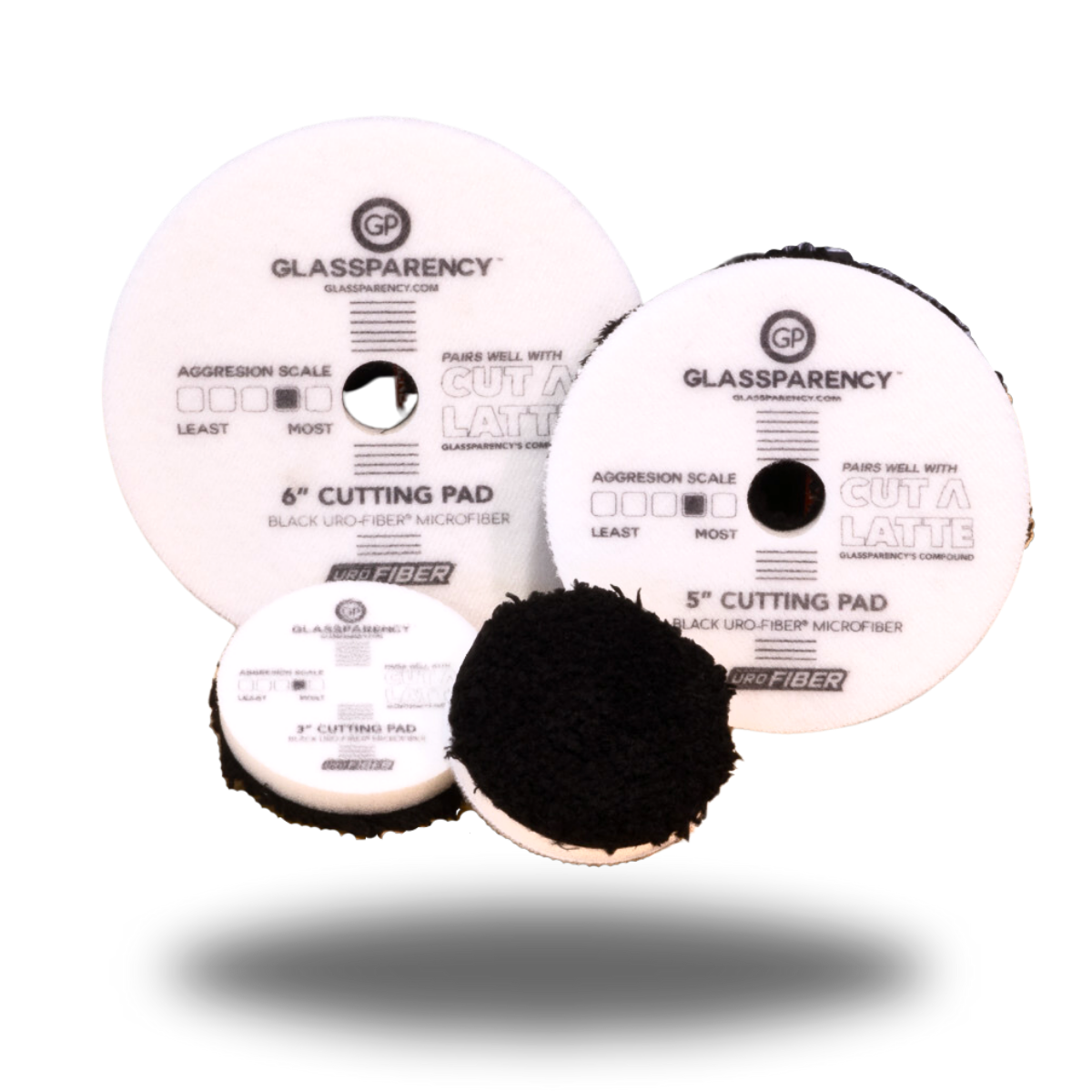
Black UroFiber Medium Cut Microfiber Pad
Microfiber correction pad for higher defect-removal demand than a finishing foam pad, while staying below the aggression of the heaviest cutting systems.
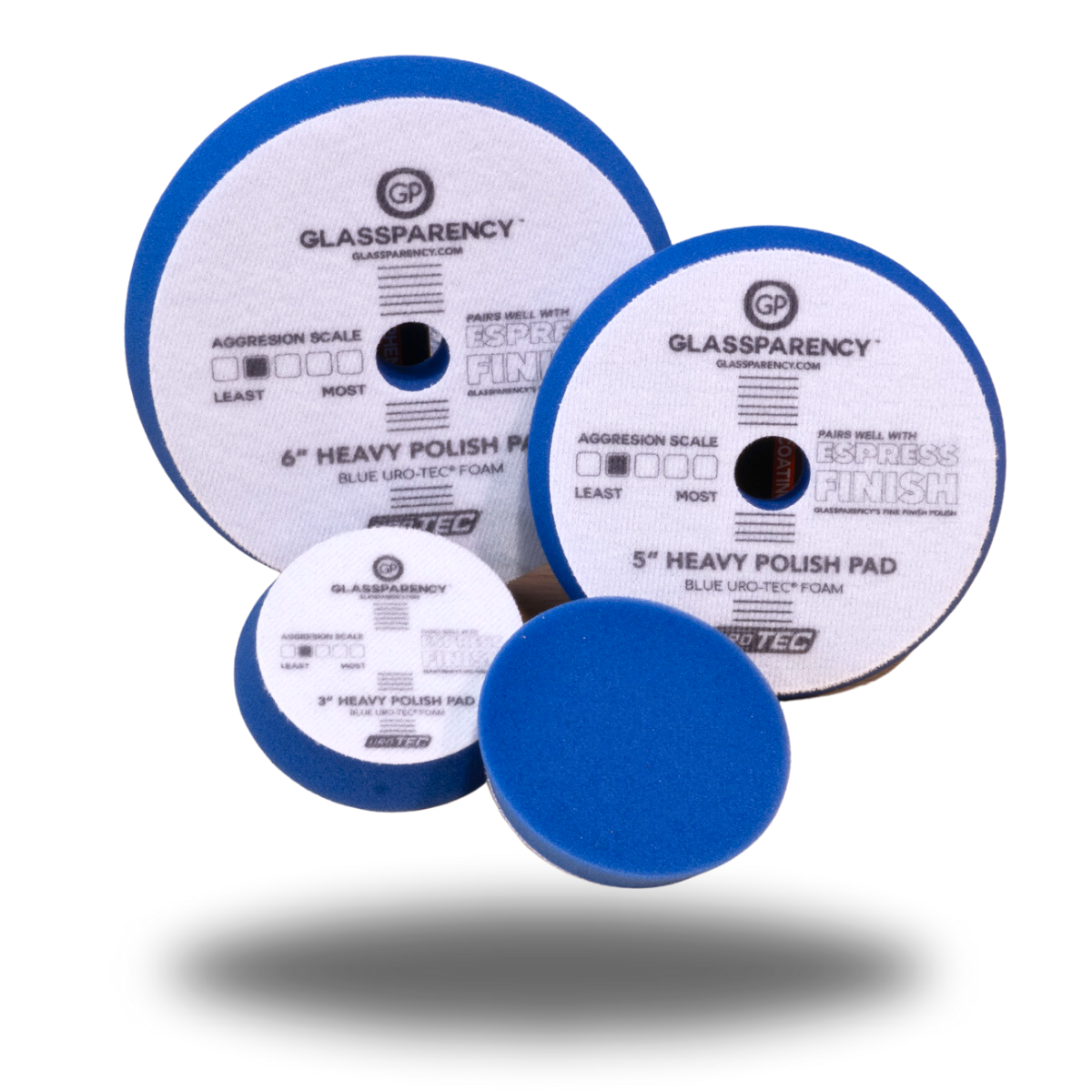
Blue UroTec Light Cut/Heavy Polish Foam Pad
Light-cut/heavy-polish foam pad for refinement, one-step correction, or softer paint where a medium-cut pad is too aggressive.

Cut, Polish, Finish All-in-One Pads Kit
Correction component whose result depends on pad material, liquid, machine throw, pressure, speed, paint hardness, and cycle time.
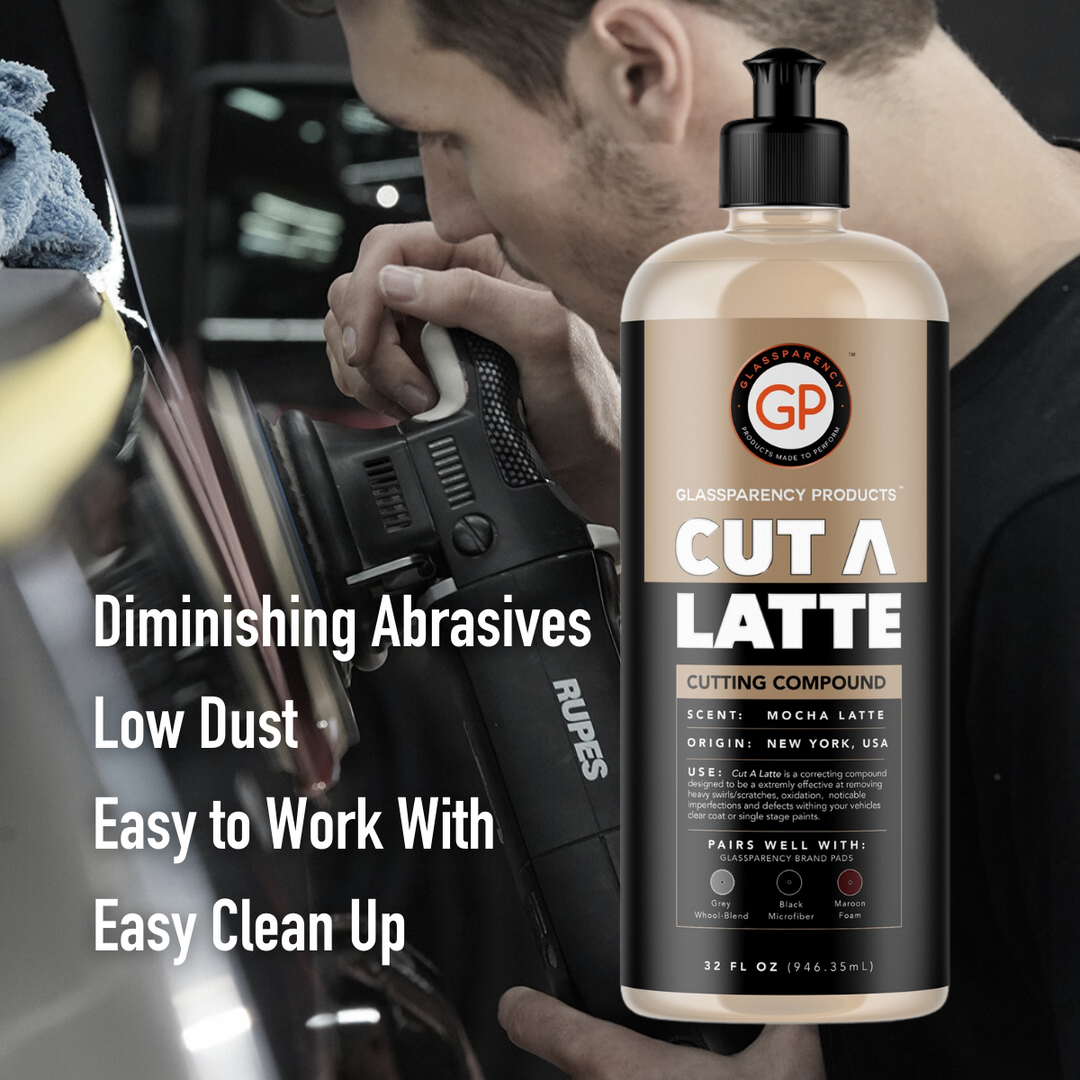
Cut-a-Latte Cutting Compound
Correction component whose result depends on pad material, liquid, machine throw, pressure, speed, paint hardness, and cycle time.